All metallic parts of a structure, electrical equipment and their supply cables should be incorporated into theLightning Protection Design. This prevents dangerous ‘side flashing’ (or sparking) between the Lightning Protection Air Termination Network and the conductive parts of the structure/building to be protected.
Where adequate separation exists between the Lightning Protection System and the conductive parts of the structure, side-flashing is considerably reduced.
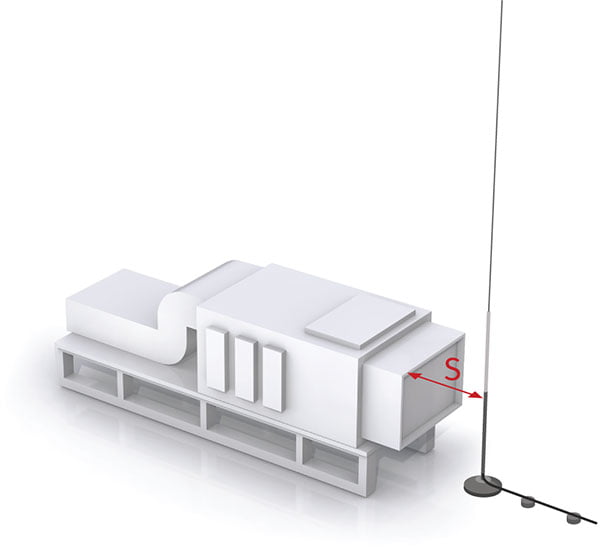
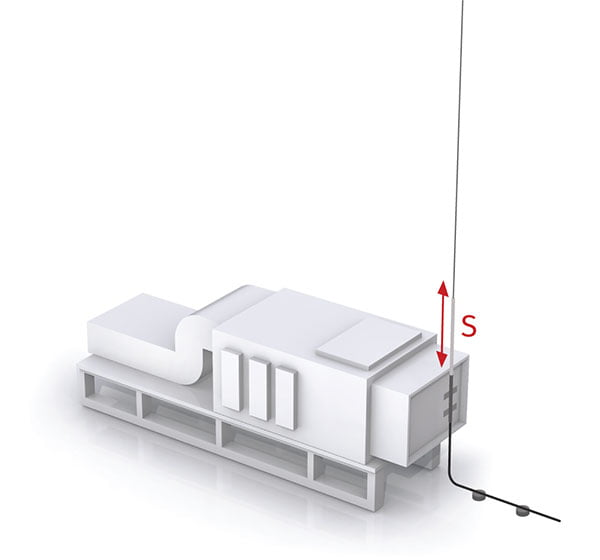
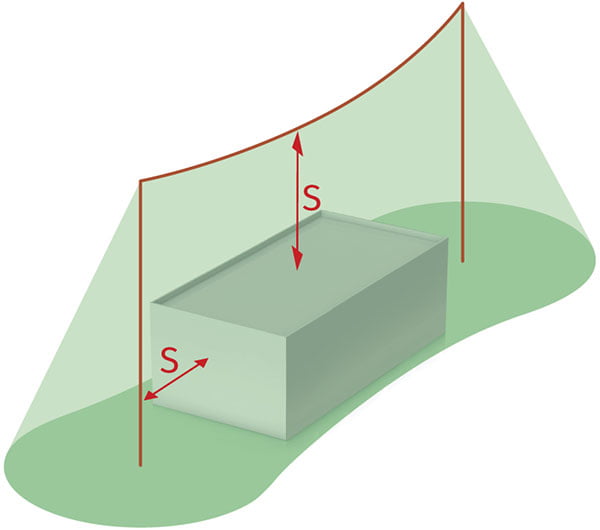
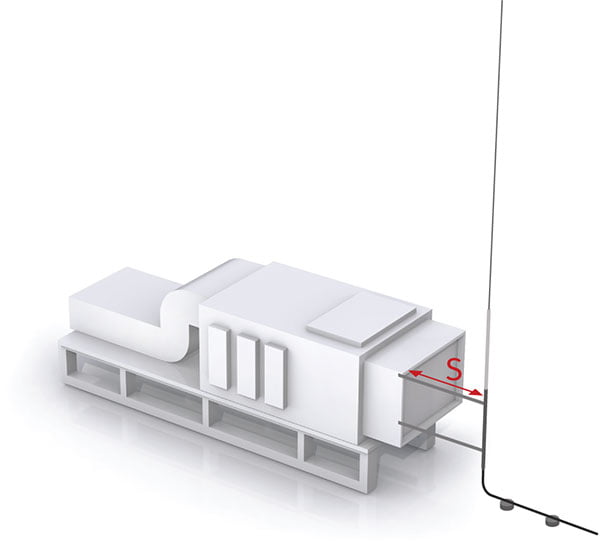
Some examples of achieving separation distance using Air Terminals are:
Fixed or Free-Standing Masts
Maintaining the appropriate separation distance when there is plenty of roof space available to site masts.
Insulated Lightning Conductor
Using the Insulated Lightning Conductor cable system to simulate separation distance where the lack of space dictates that the Lightning Protection system must pass close to, or be connected to, the object to be protected.
Suspended Catenary Wires
Where space allows the use of an isolated lightning protection system, for example a series of masts and catenary wires.
Insulated Separation Bars
Where it is not possible, due to space constraints, to use a tripod mast, but it is possible to connect one end of an insulated spacer bar to the object to be protected, and the other to the lightning conductor/mast.
Kingsmill Industries uses cookies to optimize your experience on this site and to offer you services and communications tailored to your interests. By continuing to browse our site, you consent to the use of these cookies.